


Back Pain That Travels Down Your Leg: What It Could Mean


The Nerve, Muscle & Joint Health Newsletter
Understanding Your Condition
Back pain is one of the most common reasons people visit a doctor. But when that pain starts to travel into the leg, or comes with numbness, tingling, or weakness, it may be a sign that a nerve is involved, not just a muscle.
This is sometimes called a pinched nerve or radiculopathy. It happens when a nerve in the lower back becomes irritated or compressed, often by a disc, bone spur, or narrowing in the spine. You may feel it as sharp or burning pain, tingling, numbness, or weakness running through the buttock, thigh, calf, or foot. Many people know it as sciatica when the sciatic nerve is involved.
The earlier nerve involvement is identified, the sooner the right care can begin. What starts as occasional tingling can progress to more persistent numbness or weakness if left untreated. Getting answers early can help prevent that progression.
At Hands-On EMG, we use advanced diagnostic tools such as Nerve Testing (EMG/NCS) and Musculoskeletal Ultrasound to find out whether a nerve is involved, which nerve, and how severely. These are safe, non-invasive tests that help your doctor understand the real source of your symptoms, so you can get the right treatment, faster.
If your back pain travels into your leg, or you notice numbness, tingling, or weakness, don’t ignore it. Getting answers early can make a real difference in your recovery.
Wellness Corner
Gentle Exercises to Support Your Back and Ease Discomfort
These movements can help reduce muscle tension and support comfort in the lower back and legs. They do not replace a medical evaluation, always move slowly and stop if you feel sharp or worsening pain.
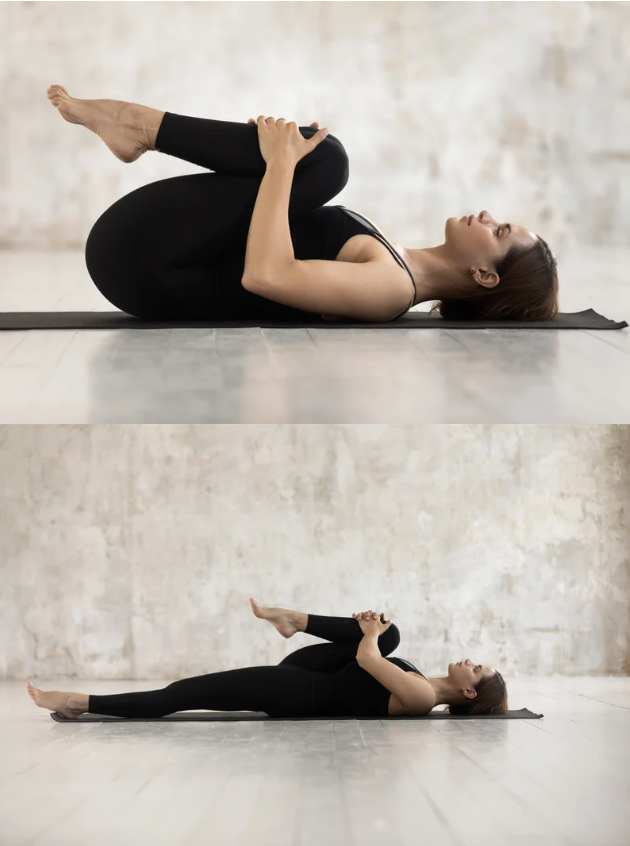
1. Knee-to-Chest Stretch
Lie on your back with both knees bent. Slowly bring one knee toward your chest and hold it gently with both hands for 20–30 seconds. Lower and repeat on the other side. This gently releases tension in the lower back and hip area.

2. Cat-Cow Stretch
Start on your hands and knees. Slowly arch your back upward like a cat, tucking your chin and tailbone. Then gently lower your belly toward the floor, lifting your head and tailbone. Move slowly between these two positions 8–10 times. Helps keep the spine mobile and reduces stiffness.

3. Pelvic Tilt
Lie on your back with knees bent and feet flat on the floor. Gently tighten your abdominal muscles and press your lower back into the floor. Hold for 5 seconds, then release. Repeat 10 times. Activates the core muscles that support the spine.

4. Seated Piriformis Stretch
Sit in a chair with your back straight. Cross one ankle over the opposite knee, then lean forward gently from the hips until you feel a mild stretch in the buttock. Hold for 20–30 seconds per side. Can help relieve tightness that contributes to sciatic-type symptoms.

5. Short Walks
Gentle walking for 10–15 minutes promotes circulation, keeps the spine moving, and reduces the stiffness that often accompanies back pain. Start slowly and build up your time gradually.
Helpful Daily Tips
- Change positions every 30–40 minutes — avoid prolonged sitting or standing
- When lifting, bend at the hips and knees, not the waist
- Sleep on your side with a pillow between your knees to reduce pressure on the lower spine
- Pay attention to whether leg symptoms change with position — and share that with your provider
If your back pain is worsening, spreading further down the leg, or affecting your ability to walk or carry out daily activities, it may be time for a more complete evaluation. Early testing can identify the problem before it progresses.
Did You Know?
Not all back pain starts in the back. In some cases, nerve irritation in the lumbar spine causes symptoms felt far away — in the calf, foot, or toes — with little or no back pain at all. This is why symptoms alone are not always enough to find the source. Proper nerve testing traces the problem back to its origin so that treatment can be directed at the right place.

Know Someone Who Needs Help?
If you or someone you know is experiencing numbness, tingling, pain, weakness, or other nerve, muscle, or joint-related symptoms, Hands-On EMG Testing may be able to help provide answers.
With several locations across Manhattan, Queens, the Bronx, Brooklyn, and Long Island, we make it easier for patients to access advanced diagnostic testing close to home. Our team provides EMG/NCS and musculoskeletal ultrasound testing to help identify the cause of symptoms and support the right next steps in care.
Ask your physician or provider to refer you, or use our online referral form here.
Feel free to share this newsletter with friends and family members who may benefit from expert diagnostic testing and clearer answers about their symptoms.

